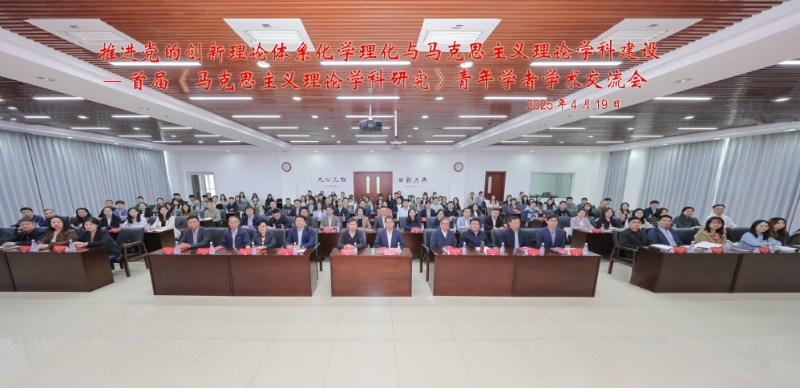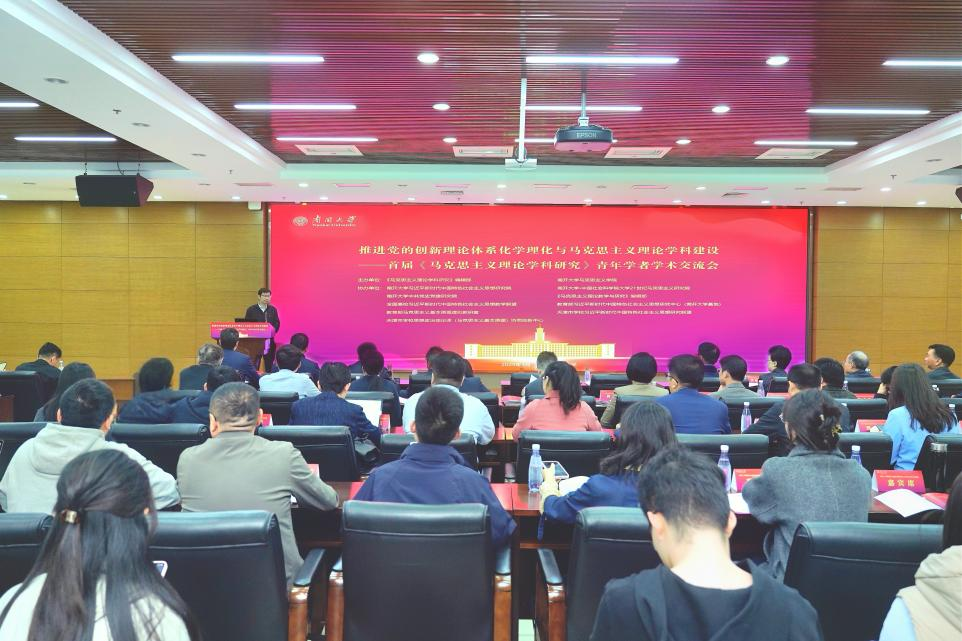
On April 19th, the first Academic Exchange Conference for Young Scholars of Studies on Marxist Theory, co-hosted by the Editorial Board of “Research on Marxist Theory” and the School of Marxism of Nankai University, took place at Nankai University. Over a hundred experts and young scholars from more than 50 universities nationwide gathered to conduct in-depth discussion on the theme of “Promoting the Systematization and Theorization of the Party’s Innovative Theories and the Construction of Marxist Theory Discipline”.
Niu Wenli, Deputy Secretary of the Party Committee of Nankai University; Sun Jiuyi, Director of the Theoretical Division of the Tianjin Municipal Party Committee Publicity Department; Tan Fangzheng, Deputy Secretary of the Party Committee and Editor-in-Chief of Higher Education Press, and Editor-in-Chief of Studies on Marxist Theory, attended and delivered opening remarks. The opening ceremony was chaired by Liu Fengyi, member of the Standing Committee of the Party Committee and Director of the Publicity Department of Nankai University
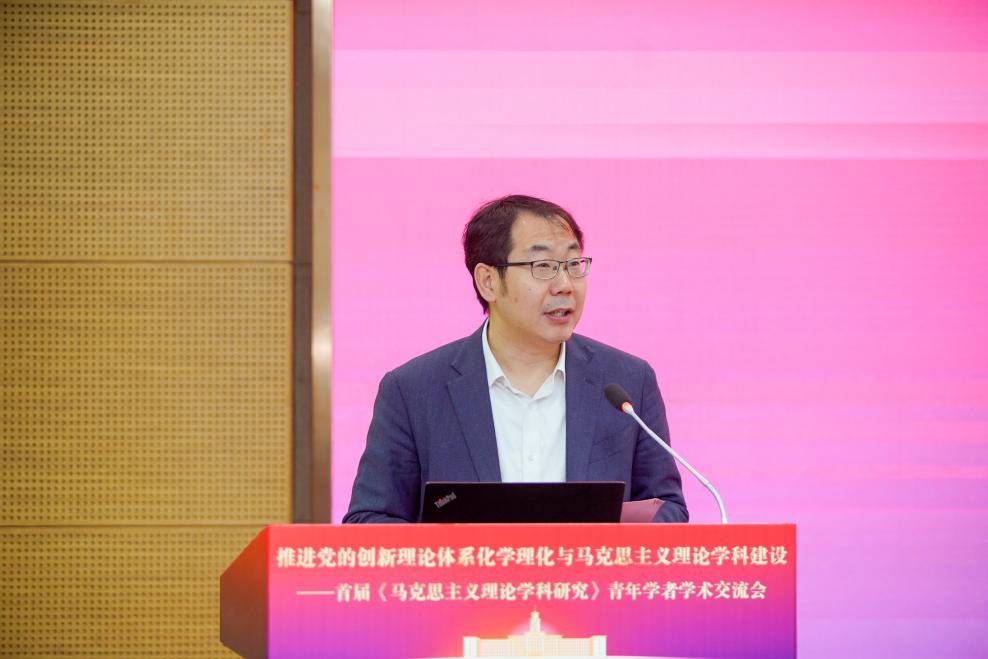
In his speech, Niu Wenli extended a warm welcome and heartfelt gratitude to the participants on behalf of Nankai University. He pointed out that Nankai University has always attached great importance to the construction and development of Marxist theory discipline. He stated that the holding of this conference is of great significance for studying, publicizing, and interpreting Xi Jinping Thought on Socialism with Chinese Characteristics for a New Era, accelerating the construction of a disciplinary system, academic system and discourse system of philosophy and social sciences with Chinese characteristics, and building China’s independent knowledge system. He expressed hope that the conference would foster collective wisdom to explore new pathways for the discipline’s development.
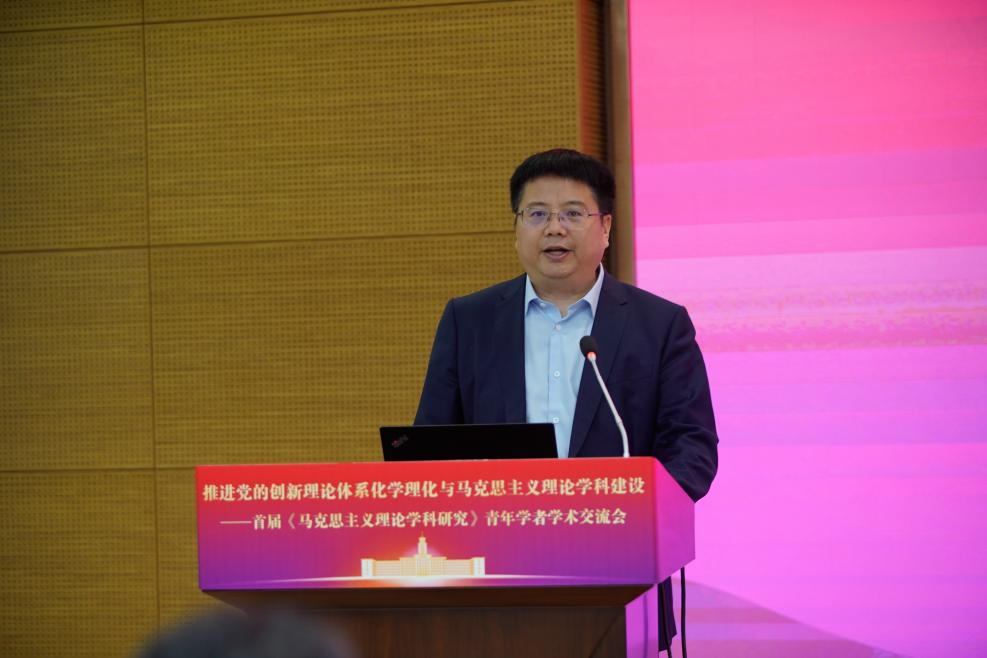
Sun Jiuyi, on behalf of the Theoretical Department of the Tianjin Municipal Party Committee Publicity Department, extended a warm welcome to the distinguished guests and expressed sincere gratitude to the expert leaders who have supported the social science work in Tianjin. He pointed out that over the twenty years since Marxist Theory became a first-level discipline, it has consistently maintained its theoretical gene of upholding fundamental principles while breaking new ground and keeping pace with the times. He emphasized that young scholars engaged in Marxist research in the new era should innovate in discourse expression fromthree key aspects: being proficient in speaking the Party’s language, using great truths to guide small truths; being good at speaking the language of the youth, using things around to touch people around; and being brave to speak the language of the internet, suing positive energy to dispel negative energy, so as to enhance the quality of theoretical communication and interpretation.
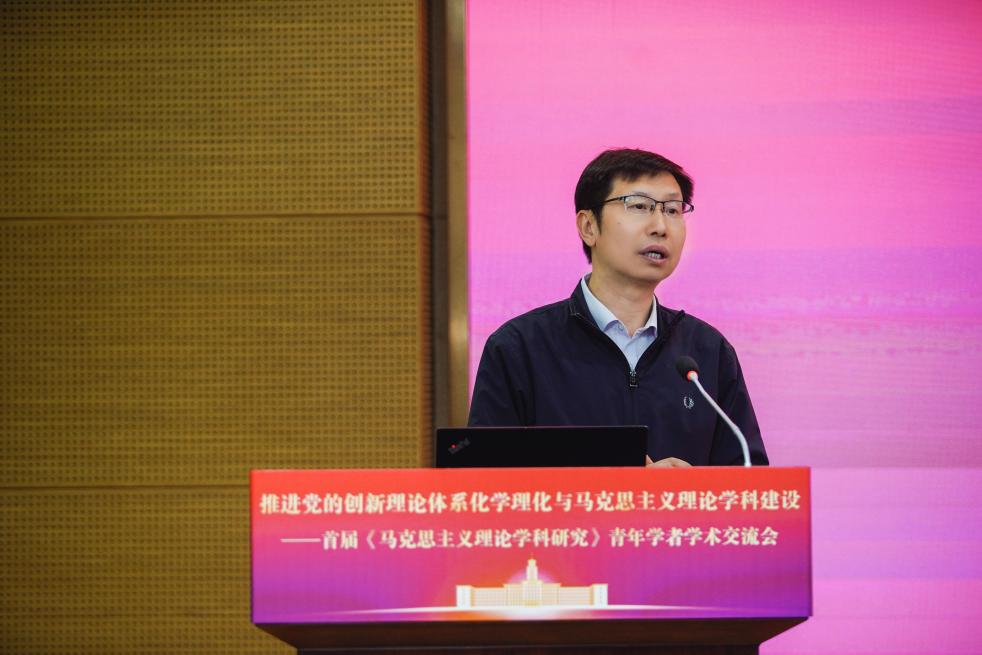
Tan Fangzheng noted that since its inception ten years ago, Studies on Marxist Theory has made unremitting efforts to contribute to the systematization and theorization of the Party’s innovative theories, the disciplinary development of Marxist theory, and talent cultivation. He put forward three expectations for the young scholars present: First, as a new force in Marxist theoretical research, young scholars should inject vigorous momentum into the innovative development of Marxist theory, and devote themselves to consolidating and enhancing the leading position of Marxist theory as a discipline. Second, they should be down-to-earth, study solidly, deeply explore the classics, write papers based on the great practice in China while expand their international perspective, thereby contributing to the innovative development of Marxist theory in the new era. Third, they should promote the dissemination of Marxism through vivid and engaging discourse, making Marxist theory more accessible to the public in appealing forms, and become practitioners of Marxist discourse innovation in the new era.
The keynote report session was chaired by Yu Xiaoning, Director of the Ideological and Political Education Department at Higher Education Press and Executive Deputy Editor-in-Chief of Studies on Marxist Theory. Renowned domestic experts in the discipline field, such as Wu Qiantao, Senior Professor of Humanities and Social Sciences of Tsinghua University, Huang Rongsheng, former Party Secretary of Southwest University, Liu Jianjun, Outstanding Scholar and Distinguished Professor of Renmin University of China, Li Zhongjun, Party Secretary of Northeast Normal University, Chen Jinlong, Professor of South China Normal University, and Wang Xinsheng, former Vice President of Nankai University, Dean of the School of Marxism, and Executive Deputy Editor-in-Chief of Studies on Marxist Theory, delivered keynote reports at the conference.
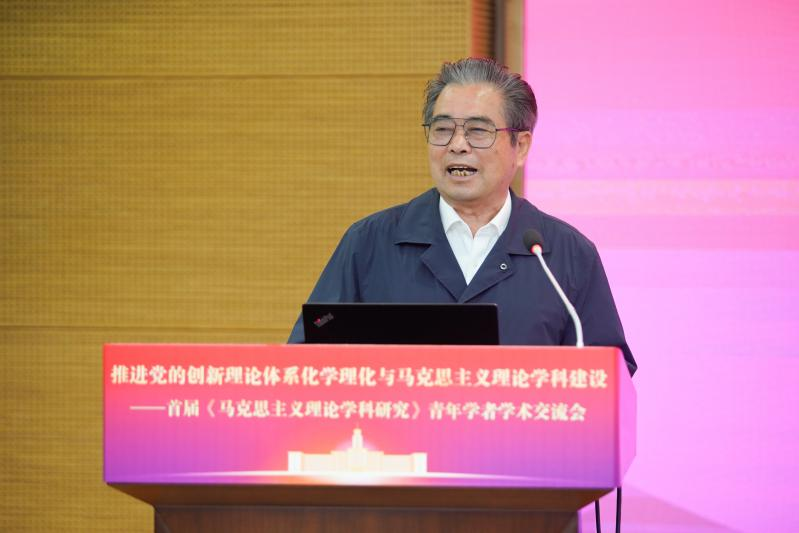
Wu Qiantao shared three insights on “How to Correctly and Scientifically Understand and Grasp the Party’s Innovative Theories”. First, regarding the “first combination”, it is essential to grasp the continuity the spirit of keeping pace with the times between Marxism in the 21st century and the thoughtsof classical Marxist writers. Second, concerning the “second combination”, it is necessary to pay attention to unity of historical origins and contemporary perspectives. Finally, using the research on the “ great founding spirit of the Party” as an example, he stressed the importance of maintaining a problem-oriented approach and fostering problem awareness.
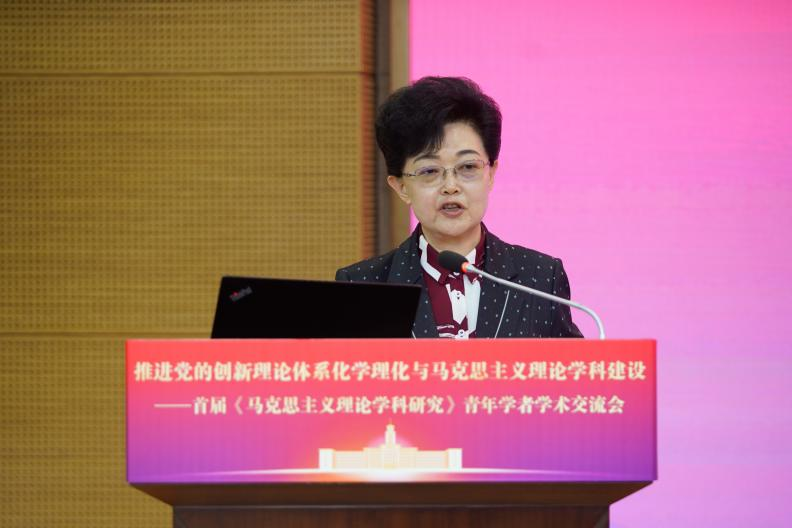
Huang Rongsheng delivered a keynote speech titled “How Young Scholars Should Conduct Research”, providing a systematic analysis of contemporary challenges in academic research while clearly defining the essence and methodology of scholarly work. She emphasized that pursuing scientific research represents both the professional duty and historical mission of young scholars. In the academic practice, we should establish clear research direction by solidifying theoretical grounding and maintaining proper academic positioning, adopt an issue-driven approach that responds to contemporary needs while fulfilling scholarly responsibilities, and incorporate cutting-edge tools like AI responsibly, while upholding rigorous research ethics and methodology appropriate for the digital age.
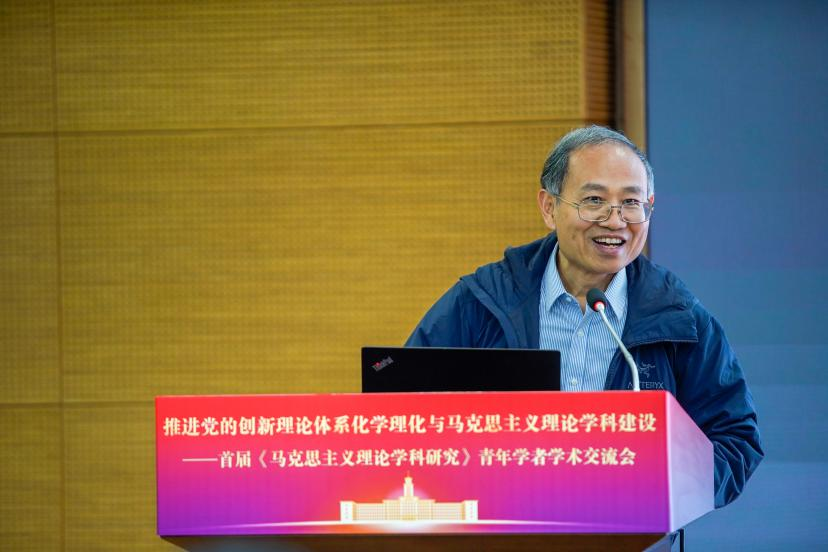
Liu Jianjun delivered a presentation titled “How to Derive Research Topics from the General Secretary’s Important Speeches”, illustrating his methodology through five distinct approaches to academic writing: Direct Quotation, Contextual Adaptation, Theoretical Transposition, Key Interpretation, Systematic Synthesis. He cited the ten key principles summarized in his paper “Ten Principles of Ideological and Political Work in the New Era: Xi Jinping’s Innovative Development of the Principles of Ideological and Political Work”, sharing his methodological insights on academic writing.
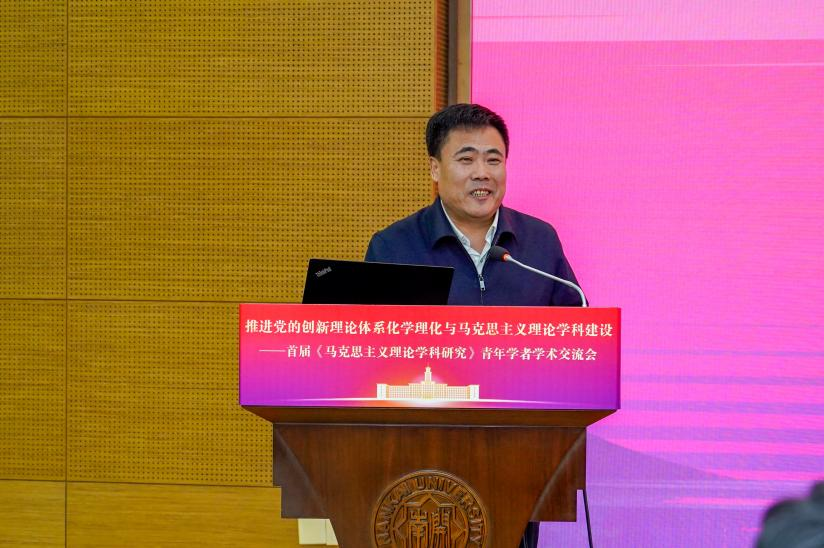
Li Zhongjun profoundly expounded his thoughts on the construction of “Marxist Ideological and Political Education” from three aspects. He pointed out that we should base ourselves on the great practice of Chinese-style modernization, combine with the classic texts of Marxism, and profoundly expound on the great achievements of the Communist Party of China in ideological and political education.
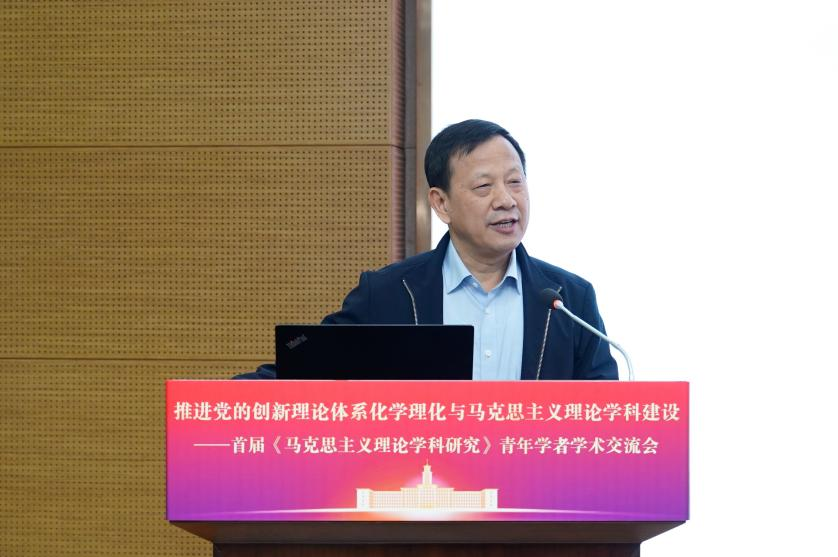
Chen Jinlong, under the title of “The Methodology for Promoting the Systematization and Theorization of the Party’s Innovative Theories”, proposed that it is necessary to interpret the Party’s innovative theories from an overall perspective, explain the Party’s innovative theory with academic expressions, and summarize the Party’s innovative theory with regular understanding. He pointed out that promoting the systematization and theorization of the Party’s innovation theory each has its own emphasis and the two are both different and mutually reinforcing. It is necessary to pay attention to organically integrating the promotion of systematization and theorization of the Party’s innovative theories with the construction of an independent knowledge system of Chinese philosophy and social sciences.
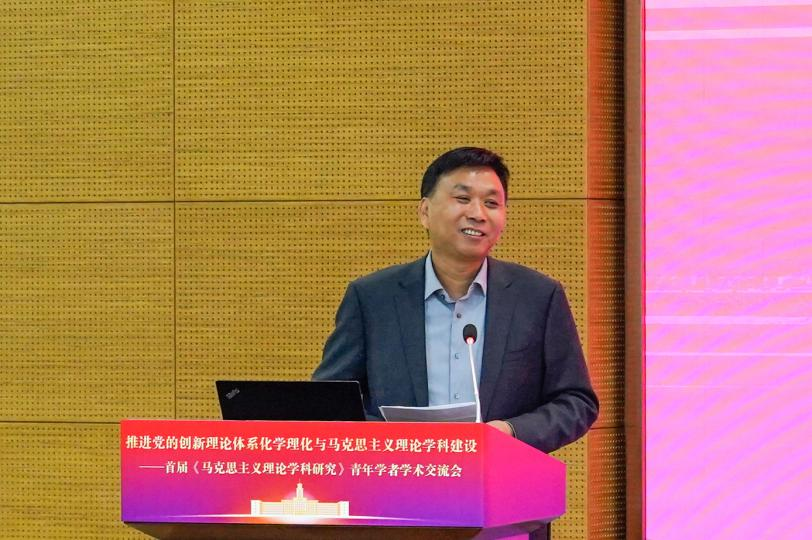
Wang Xinsheng shared his thoughts on “How to study Xi Jinping Thought on Socialism with Chinese Characteristics for a New Era and How to Study the Party’s Innovative Theories”. He pointed out that it is necessary to start from constructing an independent knowledge system and handle the dialectical relationship between systematic integration and specific research properly; start from the perspective of transforming the writing style and handle the dialectical relationship between academic nature and popularization properly; start from the integration of interdisciplinary studies and handle the dialectical relationship between the “broad field of Marxism” and the “narrow field of Marxism” properly. In addition, he also summarized the achievements and experiences of Nankai University in integrating the Party’s innovative theory into the teaching system of ideological and political courses.
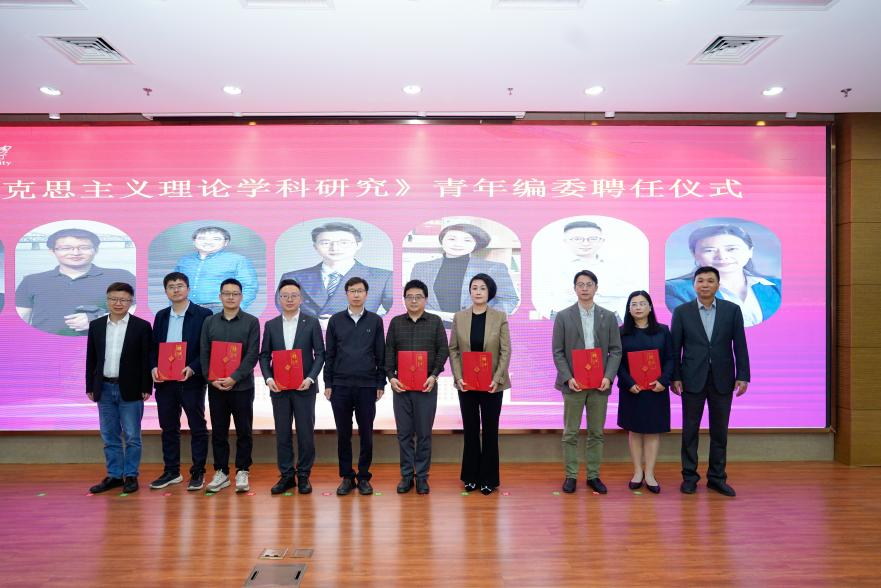
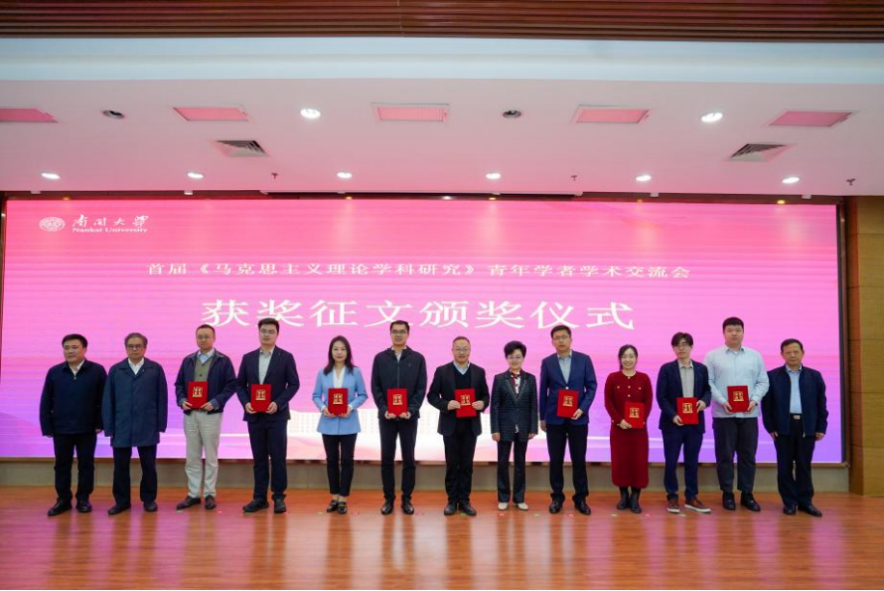
During the appointment and award-giving ceremony in the second stage, Tan Fangzheng announced the list of the first cohort of young editorial board members for Studies on Marxist Theory . Tan Fangzheng, Wang Xinsheng, and Yu Xiaoning presented certificates to the appointed young editorial board memebers. Twenty outstanding papers were selected from 647 submissions. Professors Wu Qiantao, Huang Rongsheng, Li Zhongjun, and Chen Jinlong presented the honorary certificates to the representative authors of the award-winning papers.Zhang Nan, deputy director of the Ideological and Political Work Department of Higher Education Press and deputy editor-in-chief of Studies on Marxist Theory, presided over the appointment and award-giving ceremony.
The keynote speeches in the third-stage of the conference were successively presided over by Wang Zhiqiang, the chief editor of Social Sciences in China, and Jiang Zhengxiang, the director of the Theory Department of Guangming Online. Professor Yang Wei from the School of Marxism of Wuhan University, Professor Duan Yan from the School of Marxism of Northeast Normal University, Professor Shi Hongbo from the School of Marxism of Shanghai Jiao Tong University, Professor Zhang Zhi from the School of Marxism of Renmin University of China, Researcher Zhong Qidong from the School of Marxism of Peking University, Associate Professor Wang Guixian from the School of Marxism of Tsinghua University, and Professor Liu Mingming from the School of Marxism of Nankai University, shared their own growth experiences in teaching and research, and also shared insights and suggestions on the academic growth and development of young scholars.
In the afternoon, three round-table discussions were set up. The scholars attending the meeting conducted extensive and in-depth discussions on “Research on the Basic Principles of Marxism and Their Contemporary Value”, “Research on the Sinicization and Modernization of Marxism”, and “Research on the Theory and Practice of Ideological and Political Education”. They presented the theoretical achievements of academic research in various secondary disciplines of Marxist theory from different perspectives. Two young editorial board members and journal editors were invited to each roundtable meeting to comment on the speeches.
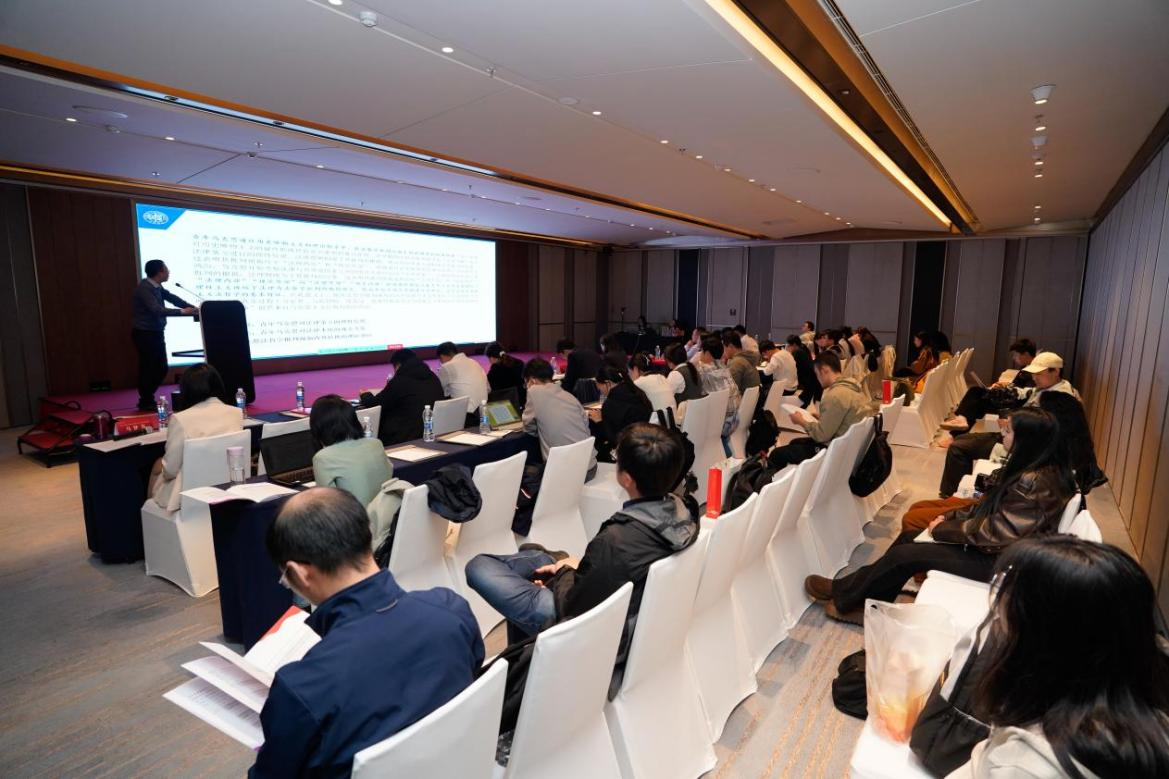
The closing ceremony of the conference was presided over by Tang Wenjia, the director of the editorial department of Studies on Marxist Theory. Yu Yifan, the executive vice dean of the School of Marxism of Nankai University, congratulated the 10th anniversary of the founding of Studies on Marxist Theory in his concluding remarks at the conference and expressed his gratitude to all the scholars for their active participation. He mentioned that journals are the cradles for the growth of young scholars, and young scholars are the hope for the future development of the discipline of Marxist theory. This academic exchange meeting had truly played the role of a bridge, achieving two-way interaction between journal editors and authors, and promoting in-depth exchanges and collisions. He hoped that similar high-level conferences can be held regularly.
This academic exchange meeting for young scholars is the first event of the series of celebration activities for the 10th anniversary of the founding of Studies on Marxist Theory. The representatives attending the meeting unanimously agreed that efforts should be made to enhance the research and interpretation of Xi Jinping Thought on Socialism with Chinese Characteristics for a New Era. As a new force in academic research, young scholars should live up to the mission bestowed by the Times, work hard on systematization and theorization, and enable the Party’s innovative theories to demonstrate a more powerful and convincing force of truth with a complete system and profound academic theories,.