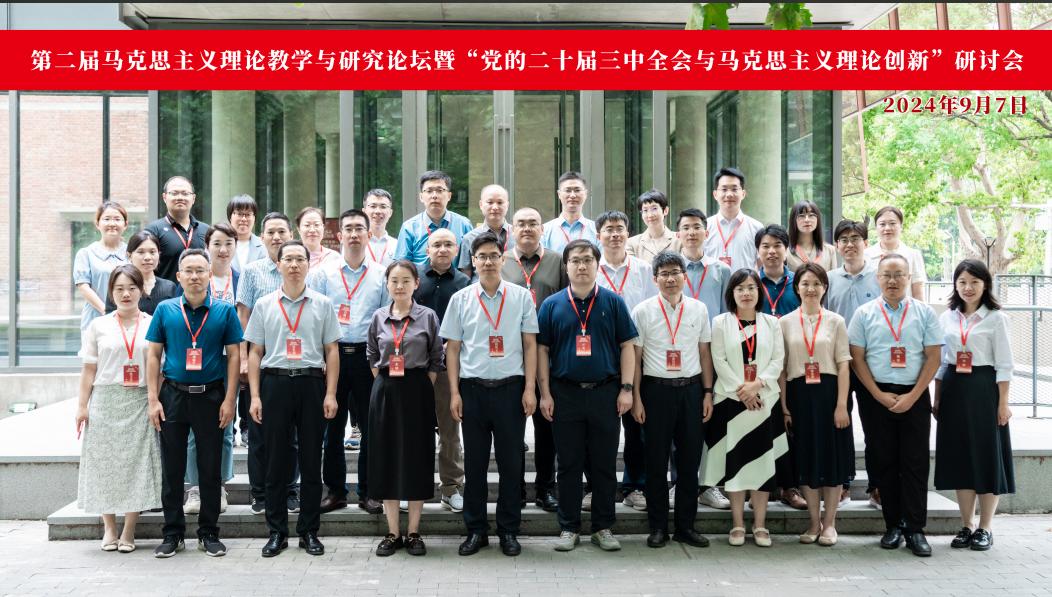
In order to deeply study and understand the spirit of the Third Plenary Session of the 20th Central Committee of the Communist Party of China, deeply study and implement Xi Jinping’s series of thoughts on comprehensively deepening reform, continuously promote the theoretical innovation, and open up a new realm of the development of Marxism in China today, The Second Forum on Teaching and Research on Marxist Theory and the Seminar on “The Third Plenary Session of the 20th Central Committee of the Communist Party of China and Innovation in Marxist Theory” were held in Tianjin on September 7, jointly organized by the School of Marxism of Nankai University, the Tianjin Universities Research Alliance on Xi Jinping Thought on Socialism with Chinese Characteristics for a New Era, and the Editorial Department of Teaching and Research on Marxist Theory. 40 experts and scholars from 22 universities and research institutes participated in the discussion, and more than 20 representatives of teachers and students attended the meeting.
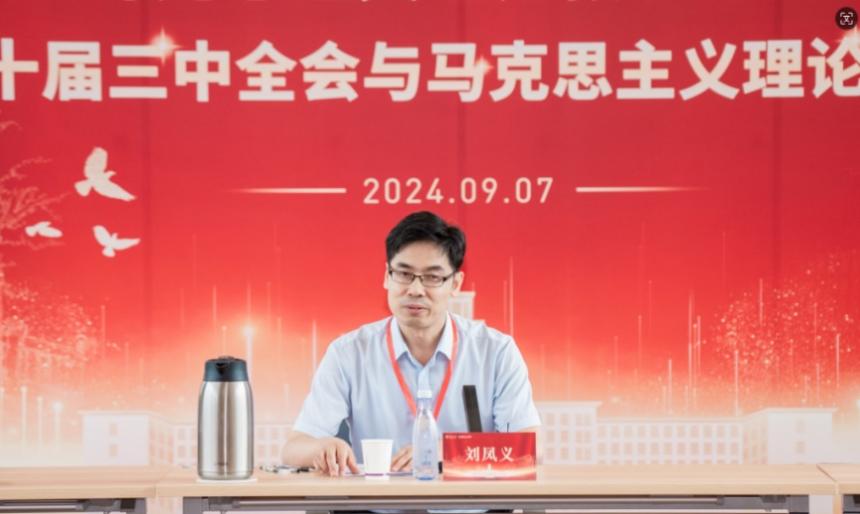
The opening ceremony of the conference was hosted by Liu Mingming, director of editorial department of the journal Teaching and Research on Marxist Theory. Liu Fengyi, minister of the Publicity Department of the Party Committee of Nankai University and associate editor of the journal Teaching and Research on Marxist Theory, attended the opening ceremony and delivered a speech. Liu Fengyi expressed his sincere gratitude and warm welcome to the scholars attending the conference. He emphasized that the Third Plenary Session of the 20th CPC Central Committee is a very important meeting, and it is a major political task to study and implement the spirit of the Third Plenary Session of the 20th CPC Central Committee. Strengthening in-depth exchanges and discussions will help further grasp the profound connotation and significance of comprehensively deepening reforms, and contribute the wisdom and strength of young scholars to build a Chinese-style Modernization on the new journey in the new era. He also thanked everyone for their high attention and strong support for the journal, and hoped that everyone would continue to support the development of the journal in the future.
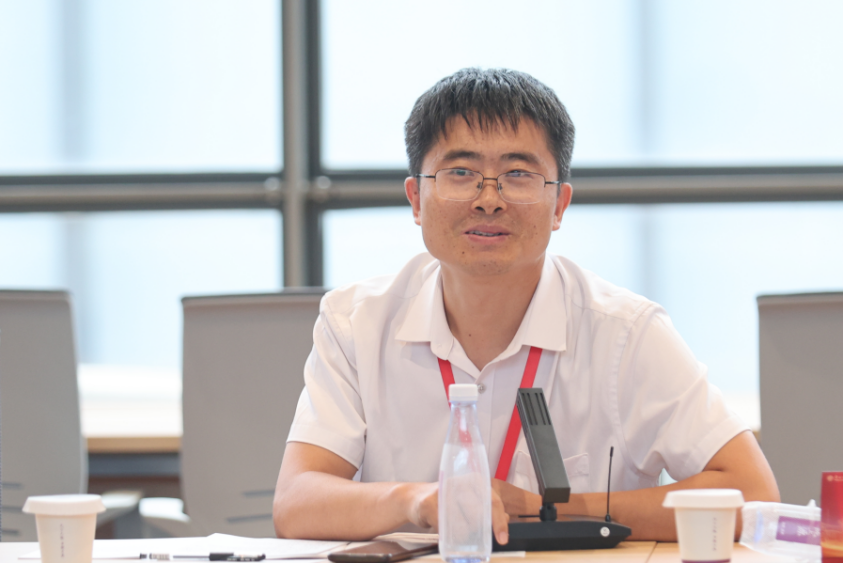
The first phase of the keynote speech was hosted by Zhang Nan, the associate editor of the journal Studies on Marxist Theory. Qi Guang, dean of the School of Marxism of China University of Mining and Technology, focused on the unique democratic view contained in Chinese modernization; Yan Fangjie, professor of the School of Marxism of East China Normal University, emphasized that new quality productive forces should be developed in comprehensively deepening reform; Tan Yali, deputy dean of the School of Marxism of Huazhong University of Science and Technology, focused on the contemporary significance of deepening the reform of cultural systems and mechanisms; Tian Xuming, deputy dean of the School of Marxism of Guangxi Normal University, analyzed the internal logic of promoting Chinese-style modernization through comprehensively deepening reform; Zhou Luping, associate professor of the School of Marxism of Shanghai Jiao Tong University, elaborated on the internal logic of Marx’s Need Theory and common prosperity; Chen Mingkun, associate professor of the School of Marxism of Renmin University of China, emphasized that we must deeply understand the further comprehensive deepening of reform; Yuan Hang, lecturer of the School of Marxism of Nankai University, analyzed the discourse paradigm innovation and China’s construction of public philosophy.
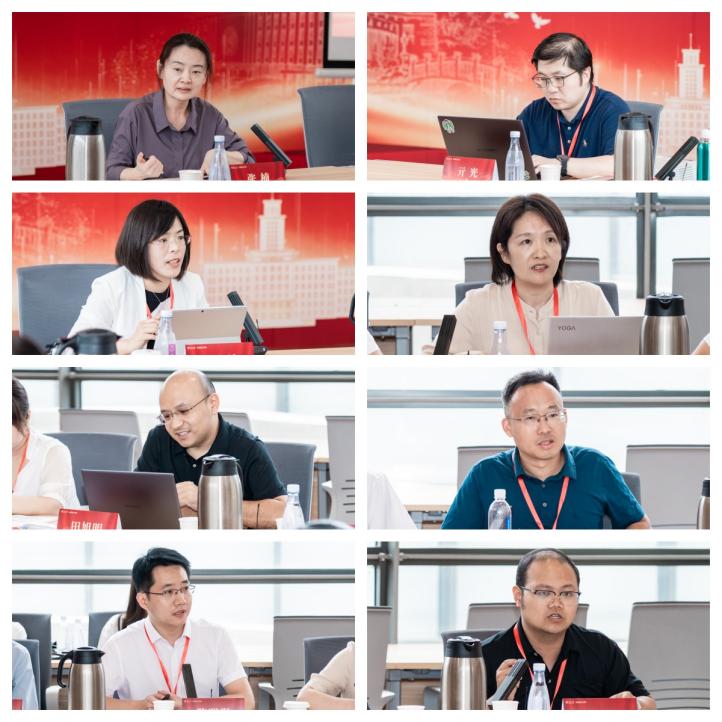
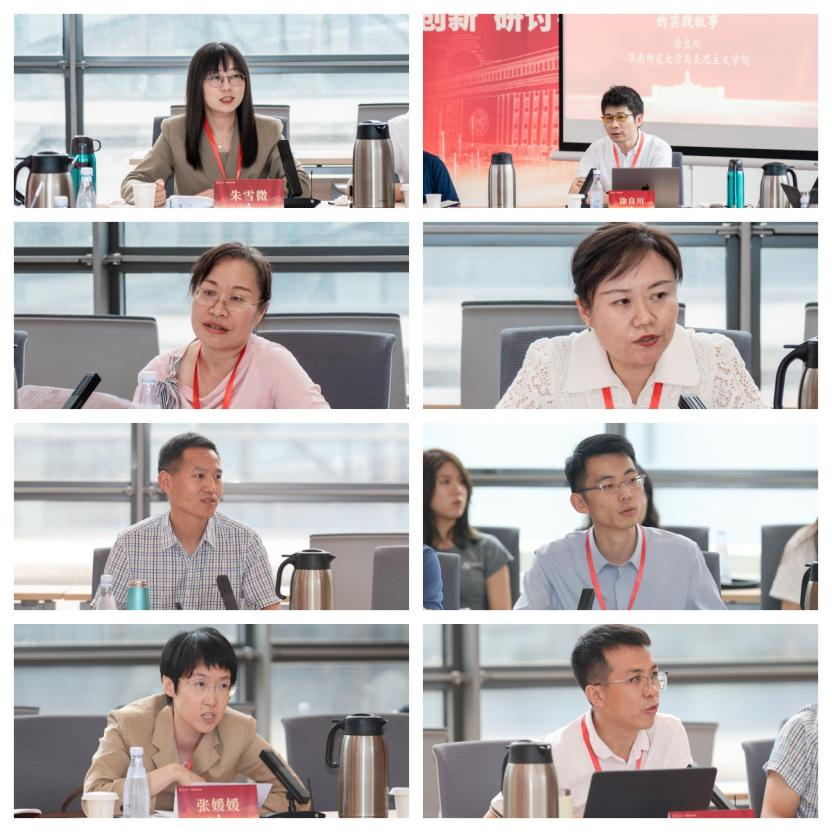
The second phase of the keynote speech was hosted by Zhu Xuewei, associate professor of the School of Marxism of Nankai University. Tu Liangchuan, deputy dean of the School of Marxism of South China Normal University, focused on exploring the practical narrative issues of further deepening reform comprehensively to advance Chinese-style modernization; Hu Ying, professor of the School of Marxism of Sun Yat-sen University, summarized the valuable experience of comprehensive deepening reform in the new era from the aspects of guiding principles, methods and approaches; Miao Ruidan, professor of the School of Marxism of Xiamen University, discussed the unique values contained in Chinese-style modernization from the aspects of theoretical origins, value core and transcendence; Wang Tongchang, professor of the School of Marxism of Hohai University, elaborated on the historical context, logic of the times, and practical requirements of adhering to govern the by the spirit of reform and strict standards; Bao Weijie, associate professor of the School of Marxism of Fudan University, focused on the basic characteristics, core propositions and development paths of a high-level socialist market economy; Zhang Yuanyuan, professor of the School of Marxism of Tianjin University, analyzed the concept and cornerstone of technology finance; Wang Xingang, lecturer of the School of Marxism of Nankai University, discussed the historical process of Chinese-style modernization from the perspective of the transformation of industrialization.
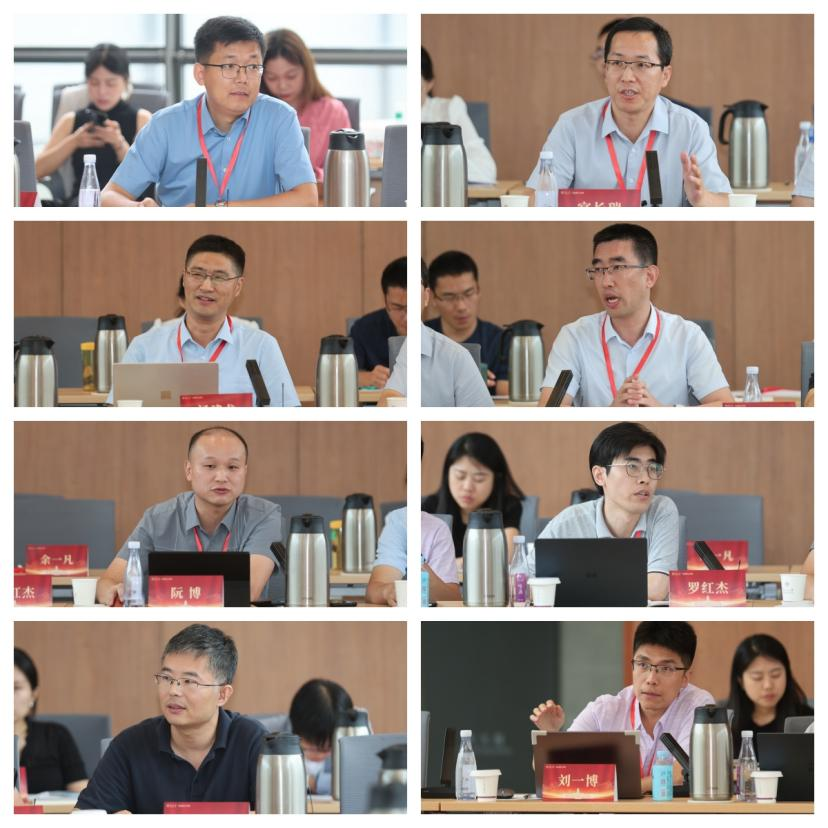
The third stage of the keynote speech was hosted by Chang Yanhui, associate professor of the School of Marxism of Nankai University. Gong Changrui, professor of the School of Marxism of Lanzhou University, analyzed the mechanism and implementation path of the demassification of ideological and moral education in the digital era; Tang Jianlong, deputy dean of the School of Marxism of Nanjing Normal University, elaborated on the principles and methods of integrating the spirit of the Third Plenary Session of the 20th CPC Central Committee into ideological and political courses; Xiao Huanyuan, deputy dean of the School of Marxism of Dalian University of Technology, focused on the institutional construction of ideological work in the new era; Ruan Bo, deputy dean of the School of Marxism of East China University of Political Science and Law, analyzed the difficulties and responsibilities faced by the construction of patriotic education under the rule of law; Luo Hongjie, assistant professor of the School of Marxism of Tongji University, focused on the recognition mechanism of ideology and its daily life construction; Li Wei, associate professor of the School of Marxism of Tianjin University, focused on the four aspects of the manifestation, essence, harm and response of the penetration of historical nihilism in the network circle; Liu Yibo, associate professor of the School of Marxism of Nankai University, elaborated on the four dimensions of teaching the course of “Outline of Chinese Modern History” under the perspective of the big historical view.
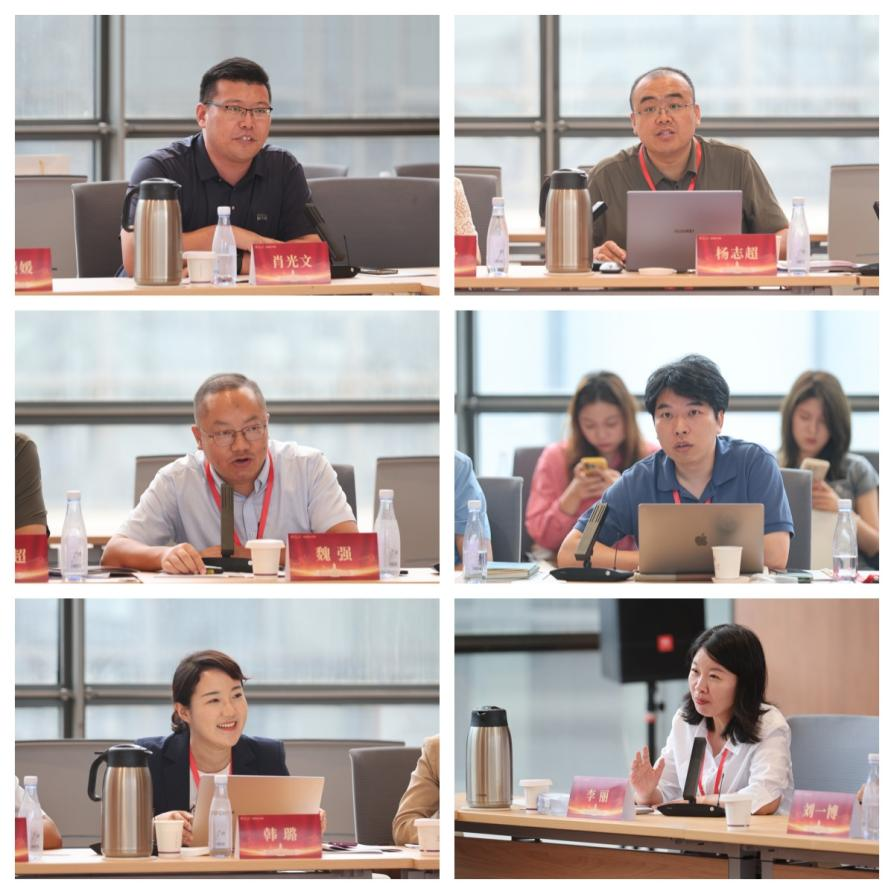
The fourth stage of the keynote speech was hosted by Xiao Guangwen, deputy secretary of the Party Committee of the School of Marxism of Nankai University. Yang Zhichao, deputy dean of the School of Marxism of Lanzhou University, focused on the dialectical relationship between the self-revolution of CPC and further deepening reform comprehensively; Wei Qiang, professor of the School of Marxism of Chongqing University, believed that it was necessary to accurately grasp the direction of reform, firmly adhere to the reform stance and scientifically understand the status of reform; Liu Wei, associate professor of the School of Marxism of Shanghai Jiaotong University, discussed the inspiration of China’s experience of reform and opening up for further deepening reform comprehensively; Han Lu, deputy dean of the School of Marxism of Northwest Normal University, analyzed the scientific methodology contained in the “channel greater energy into making our reforms integrated, focused, and effective” of comprehensively deepening reform; Li Li, associate professor of the School of Marxism of Tianjin University, elaborated on the basic connotation, value implications and main tasks of accelerating the construction of a powerful nation of science and technology.
At the conclusion of the meeting, Liu Mingming highly affirmed the academic value and significance of the meeting, believing that the meeting not only provided a platform for in-depth exchanges for experts and scholars, but also made positive contributions to promoting the innovation and development of Marxist theory. He pointed out that the speeches of the experts and scholars at the meeting were rich in contents and distinct in views, which had both theoretical depth and practical guiding significance, and played an important role in deepening the understanding of the spirit of the Third Plenary Session of the 20th CPC Central Committee and promoting the innovation of Marxist theory.