In order to further enliven the academic atmosphere and expand students' research horizons, the School of Marxism will continue to hold the Youth Academic Forum this semester, inviting young teachers from inside and outside the school to carry out various forms of academic exchanges. 2024 March 2, the Department of Ideology and Politics Education invited Associate Professors Wang Yuan and Wu Shuli to share their research experiences. Young teachers Ren Menglei and Bai Yunxiang as the interlocutors, and nearly thirty undergraduates, masters and PhD students majoring in ideological and political education participated in this academic activity. The event was hosted by Associate Professor Chang Yanhui.
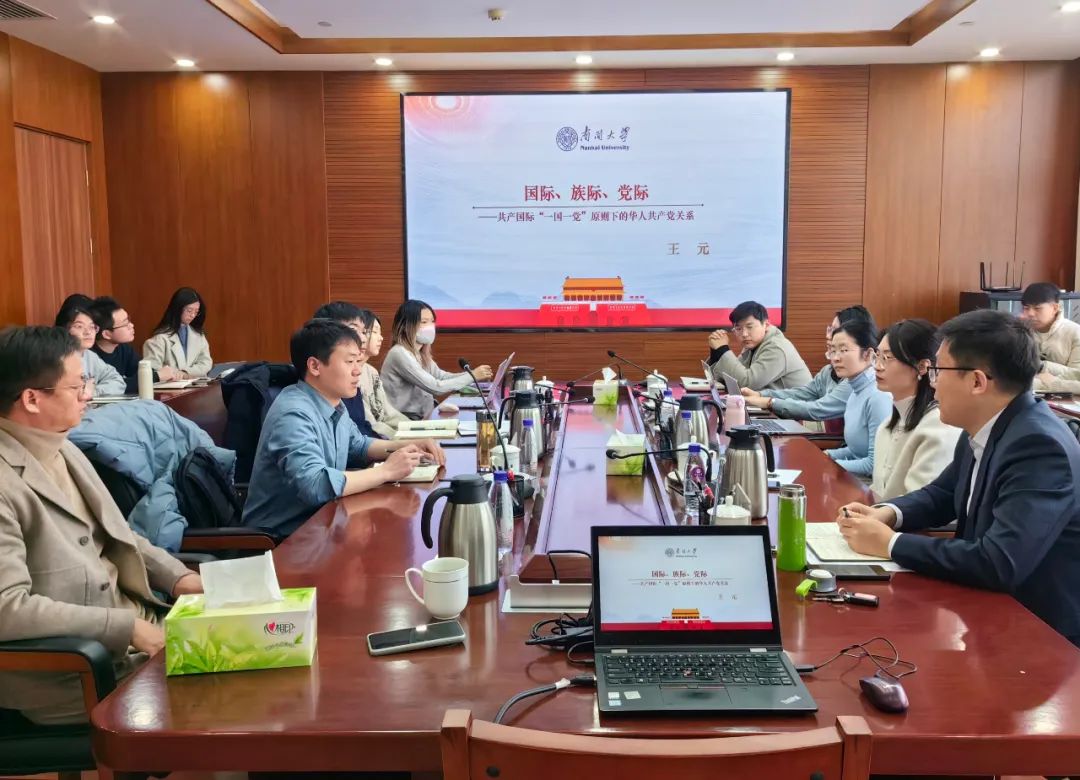
At the beginning of the forum, Associate Professor Chang Yanhui briefly introduced the purpose and process of this academic activity. He pointed out that in the past, what we discussed and studied are always the works in a finished format, so we lacked sufficient understanding of all the details of the researchers' topic selection, argumentation, and revision process, which to a certain extent affected the efficiency and effectiveness of beginners' learning. In this event, most of the presenters' essays are in the starting stage, and we would witness the whole process of these essays from topic selection to completion.
Under the title of "International, Inter-party, Inter-ethnic - The Relationship between the Comintern and the Early Chinese communist parties of Ethnic Chinese", Associate Professor Wang Yuan elaborated on the formation process of the relationship between the Comintern and the early communist parties of Ethnic Chinese. He talked about the fact that apart from the Communist Party of China, three other communist parties of Ethnic Chinese, namely the Communist Party of Taiwan, the Nanyang Communist Party and the Communist Party of Siam, were also born in the world before the Second World War. In order to co-ordinate the international communist movement and avoid internal conflicts among the communist parties of different countries, the Comintern formulated the organizational principle of "one country, one party", and carried out the localization and reorganization of the Communist Party of Taiwan, the Nanyang Communist Party of, and the Communist Party of Siam. The CPC essentially assumed the role of assisting and guiding the other three communist parties of Ethnic Chinese, creating a highly intimate, though not mutually subordinate, relationship that facilitated the communist parties of Ethnic Chinese initial explorations of international, inter-party, and cross-border ethnic relations.
Associate Professor Wu Shu Li explained how to view the social revolution led by the CPC from the perspective of big history from three aspects: "What is 'revolution'", "What is 'social revolution'" and "Social revolution led by the CPC in historical change". She argued that in the traditional semantics, the basic meaning of "revolution" is "changing the dynasty" and "turning the world upside down", but the revolution led by the CPC is not limited to this. The revolution led by the CPC is a social revolution that promotes regime change while working for social revolution at the same time. This is the proper meaning of a Marxist political party, and also the self-requirement of the CPC.
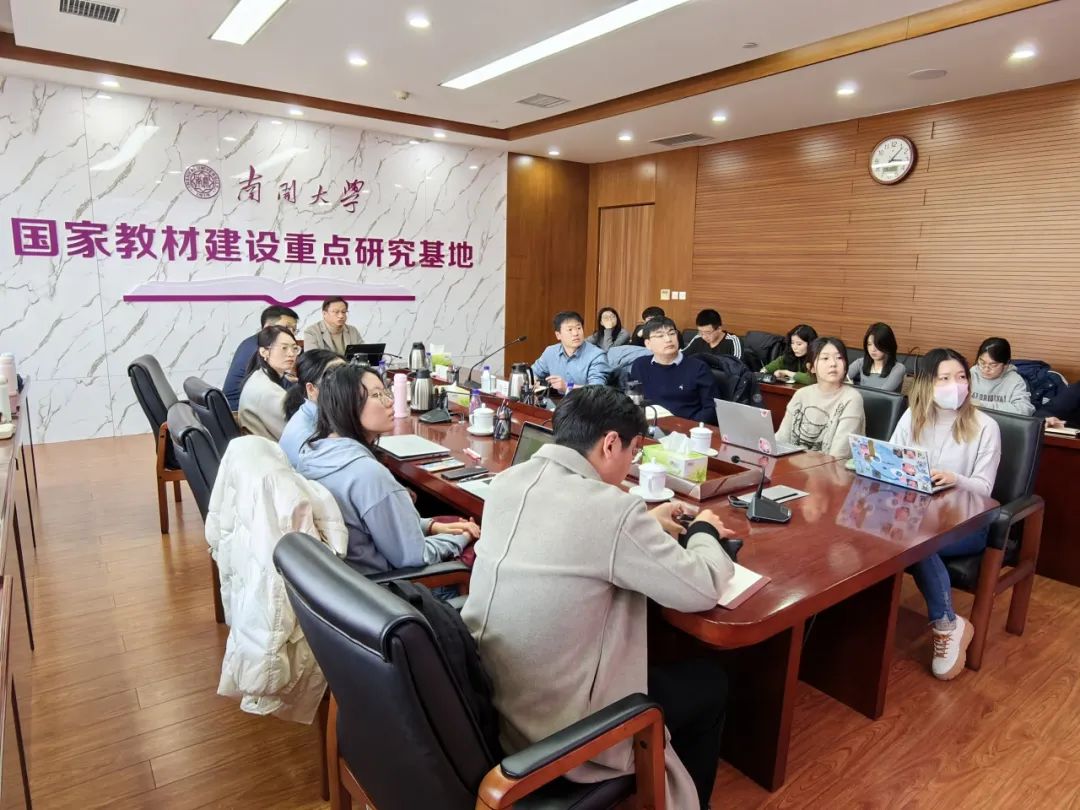
In the dialogue session, Ren Menglei and Bai Yunxiang, based on their own professional perspectives, pointed out the possible problems in the article around the sense of the problem, the main body of the vein and the logic of the argument. And in the discussion session, the students actively asked questions about the shared contents, and the two teachers patiently responded to the two interlocutors and students.
It is reported that the research departments will hold a number of academic activities this semester, and young teachers and undergraduate, master and doctoral students of various disciplines are welcome to take part in the exchange and discuss.